|
|
Editing, Language usage
 By Lynn Dean, on November 25th, 2011
If all goes as planned, this week we’ll begin remodeling our new home.
Let me share a picture that I think ties in with our writing lessons–a Spanish Mission arch on the fireplace, a Dutch door, and a Colonial mantle!
This struck me as odd the first time I saw it, but I couldn’t figure out why. I had to study the elements before I realized that “One of these things is not like the others” as Big Bird used to sing. Shoot! NONE of these things is like ANY of the others!
Maybe I’m reaching here, but sometimes I run across odd incongruities in my writing, too–especially when I read my work out loud (and if you don’t, you should). I’ll be reading along, and something seems to stick out. I trip over it. Then I go back and study that section. Almost always the problem is one of two things:
- My character would NEVER say what I wrote–or at least not in the way I wrote it. I need to “listen” to the people in my head and rewrite the story in the way they would tell it.
OR
- My writing suddenly sounded like someone else. (This usually happens when I’m not confident about a scene and just write to get it down.) For some reason I occasionally lapse into the voice of whatever I’m currently reading–a very good reason, by the way, to read quality books that stretch you as a writer!
Either way, I’ve forgotten important elements of personality and style–either mine or my characters’–and I need to edit until the scene feels cohesive.
Exercise:
- Read your most recent scene out loud to yourself
- Does anything “stick out” or “trip you up”?
- Find out why, then experiment with different ways of fixing the problem!
Editing, Pacing, Plotting, Point of View
 By Melinda Evaul, on November 18th, 2011
We started the year with a post on Story Engineering. With two contributors in the midst of home renovations, it’s no wonder if our posts about plotting a story keep drawing analogies to architecture.
We’ve likened genre to architectural style.
We’ve said that themes and motifs provide a sense of form and function to the story you’re building.
Now let’s talk about subplots.
Whether you planned them from the outset or added them during the edit process, we might say that subplots are like additions to the original structure. We add subplots for some of the same reasons we add rooms to a house:
- To enlarge or enrich
- To make room to explore other ideas and activities
- To open up different views
A good subplot grows seamlessly out of the main structure of your story, but an addition that’s merely “tacked on” will weaken your story structure!
- A new room addition is built on a solid foundation that extends from the main structure. In the same way, any subplots you add to your story need to extend from the themes and motifs of the main story. Screen writers use this trick all the time. If the main story is about a corporate cover-up, there may be a subplot in which one of the characters is covering up some “little white lies” of their own. Deceit, in large and small ways, becomes a theme that supports both stories.
- A successful addition must also be firmly connected to the original structure at several points. Whether you’re adding on to a house or adding a subplot to a story, the new and the old should relate to each other, flowing back and forth smoothly from top to bottom, beginning to end.
- When you write “The End” be sure you cover everything. It’s as unsatisfactory to leave a subplot unresolved as it would be to leave a new room hanging out from under the cover of a roof. Either way you’ll come off “all wet.”
Exercise:
- Watch a favorite movie or TV show. (Psych or Castle come to mind.) See if you can identify the foundation, structural connections, and satisfying wrap-up of the plot and subplots.
- Read the synopsis of a classic story such as The Picture of Dorian Gray. Notice how what happens to the picture ties in with the main character arc. Do you think the picture is a motif, a subplot, or both?
- Think about the main plot and subplots of the story you’re working on. How does one tie in and strengthen the other?
Themes and Motifs
 By Lynn Dean, on November 11th, 2011
I majored in architecture, and our family is in the process of buying and remodeling a house, so perhaps you’ll understand if a lot of things lately make my thoughts turn to building.
Whether you’re constructing a story or designing a house, it’s always a good idea to begin with the end in mind.
The first question you ask tends to be, “What do I hope to end up with? What will this look like when I’m done?” If you’re building a house, you need to decide whether the picture in your mind is a two-story Victorian or a ranch, a Craftsman bungalow, or a Colonial-style home.

When you’re planning a story, it’s helpful to know whether you’re writing an adventure story, a mystery, romance, sci-fi/fantasy, or historical fiction. The style of the story you’re imagining is called the genre. Shannon McNear wrote a great article about genre last month.
Once we have a mental picture of the style, the second question I ask clients about their house is “What do you hope to do here? Why are you building a new home?” People often have in mind a lifestyle or feeling about their home that’s important to them. If you care enough about a story to sit down and write 50,000 or more words about it, I’m betting you have in mind a message or impression you hope to leave with your readers–something you feel it’s important to say.
The lingering impression or message is the theme of your story.
It helps to know from the outset what you’re about. Hone it down to one sentence if you can. Write it down and tape it near your computer screen where you’ll remember it, because it will affect everything about your story from the way you craft your scenes to the subtle differences in the words you choose.
To keep the theme focused in readers’ minds, some authors like to use motifs, weaving them throughout the story.
Motifs are physical symbols of non-tangible elements of your story.
In Beauty and the Beast, the dying rose beneath the glass dome represents the selfish prince’s isolation and dying hopes of winning love.
In C. S. Lewis’ Prince Caspian, the dragon represents all the hateful attitudes that obscure the likeable fellow Eustace could become.
In The Wizard of Oz, Dorothy’s ruby red slippers represent her power to choose happiness and contentment with her life. Glenda comes straight out and tells Dorothy the secret in the closing scenes, and Dorothy realizes “There’s no place like home!” Once she finally gets back to Kansas, she repeats the message of the story to her gathered family, but themes and motifs have power even if you are more subtle in your use of them.
A clear theme and strong motif are to a story what the foundation is to a home. They are the base from which everything else rises.
Exercises:
- Think of your favorite books or movies and identify the theme and motif of each.
- Express the main message of your story in one sentence. Try to use 25 words or less.
- Experiment with strong or subtle motifs that might reinforce the theme of your story. Is there one that could carry through from beginning to end?
Plotting
 By Lynn Dean, on November 4th, 2011
A couple weeks ago, I mentioned here that I’ve been known to use Post-It Notes to plot out a story on the back of the door to my workroom. It’s a quick trick and a handy way to get ready for NaNoWriMo (or to stay on track if you’ve already started), so let me build on another article from the archives and show you how this can work.
- Getcha a big ol’ stack of Post-It Notes. It helps if you have stacks in three or more colors. We’ll get to the reason why in a bit.
- Write down an idea to start your story–a setting, a character, and a desire or problem. Don’t obsess too much about this, because you can always change it later. Just write down the starting point that’s in your head and stick it at the top of the door.
- Now cogitate a little about how you think the story ends. Again–a setting, character(s), and the desire fulfilled and/or problem solved. (That’s how we know the story’s over, right?) Jot it down and stick that note near the bottom of your door. Now you have a timeline, see?
- What goes in the middle? Ah! There’s the rub and reason that most people never actually write though many dream of doing so. But you are not so easily dissuaded! You can’t be daunted; you’re dauntless! Besides, you have mad creative skilz and an (almost) unlimited supply of Post-It Notes (and there’s more at the store). This is the time where you write down any crazy idea that pops into your head. The ideas don’t even have to come in any particular order, because you can move the sticky notes around any way you like.
- Maybe you’re one of those organized thinkers who start at the beginning and outline what comes next and next and then next until you reach “The End.”
- Maybe you play both ends against the middle, alternating the chronology of your story from next to next-to-last until the beginning and ending meet up.
- Maybe it would help you to imagine a high-drama mid-point, then go back and figure out how your characters got into that mess and how they get themselves back out.
- Maybe you’re sold on the 3-act play format. Figure out where your plot turns–what throws your hero into an adventure he can’t escape, when he decides to quit running and start fighting, the moment when all seems lost and then the point where there’s a glimmer of hope if they can just pull the mad scheme off.
- By this time, you know who those other people running around in your imagination are and how they fit into your story. THEIR story–where did they come from, what do they want, and what are they thinking–goes on the different colored Post-Its. You can also use the alternate colors to sketch out the dramatic sub-plot if you’re writing a romance or the romantic sub-plot if you’re writing an action drama.
Experiment all you like! If you don’t like the direction your story’s taking, or if it seems too “expected,” you can brainstorm brilliant new plot twists on Post-Its stuck right over the original notes so that you can always go back if things don’t work out. Or number the notes and then play around with the order of events.
Once you’ve got the main story line set up to your satisfaction, you can begin to intersperse the sub-plots. Is your hero smitten by the beautiful heroine from first meeting, or does he drag her along thinking she’s a nuisance until she saves his tail later in the tale?
When you think you’re done, do take a snapshot or transfer the notes to something more permanent. It would be a shame if the best-selling book of the year were blown away by a stiff breeze or mistakenly tossed in a frenzy of housekeeping!
Plotting, The Writing Industry
 By Naomi Musch, on October 28th, 2011
Do you have story ideas that would make a great series?
Lots of us do. It is fun to imagine a string of stories spun out of one group of characters or out of a single, long storyline like Lord of the Rings. On October 15th, my new novel The Red Fury released from Desert Breeze Publishing. It is the second book in my historical series Empire in Pine. It’s been a thrill ride, but I’ve also discovered a few things about writing a book series along the way.
Writing a series involves some preparation and organizational techniques that differ from writing a single book, but for the most part, it’s still just writing a great story . . . or two.
Here are four basic starter tips to keep in mind if you have a series churning up ideas in your imagination.
- Give your all to one book at a time. In other words, concentrate on Book One. You have to begin with One Great Idea before you can move onto the next. But it’s very easy to get distracted trying to plan for the bigger picture.
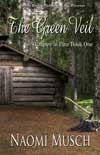
For Empire in Pine, I began with The Green Veil, a book I’d had mulling about in my mind for years and couldn’t let go of. I focused all my energy on building and writing the story of Colette who married impulsively just before the fellow she’d always cared for showed up. It wasn’t until near the end that I realized another story was waiting to be told, and I allowed myself the freedom to explore its possibilities. It’s easy to get mired down in planning a long chronicle of narratives before you even know if you’ve succeeded writing a great story in the first one, so focus on that and get it down. First things first. Write Book 1. Make it the best it can be on its own, just in case that series never develops.
- Decide if your series is going to be based around a single character whose adventures continue from book to book, a group of people with each person’s story being told in a separate volume, multiple generations, or around an event or theme. For instance, Empire in Pine is generational. I wanted to tell the story of several women’s lives (mothers & daughters) — their adventures and romances — during the rise of Wisconsin’s rich logging era. Book 2 is about the main character’s daughter from Book 1. Book 3 (coming next July) is about the daughter of the main character from Book 2. I have another book series in mind based around different women who come to the United States as King’s Girls, or Casket Girls, from France. Each one would be a separate story. The only relation between the books would be that thread that they are all Casket Girls.
It may seem like a simple decision, but when you begin to examine the possibilities, you might find that stories can be told a better way from a different person’s POV or from another angle.
- Get a bird’s eye view of the number of books in your series. This outcome might change as you go, but if you’re certain you have a series on your hands, think in terms of a manageable goal and number. Not too many writers tell themselves they’re going to write an ongoing series like Harry Potter or some of the detective heroes that have shown up in book after book. And as a new writer, your chances of finding a publishing home for a long series is also slim. So be reasonable.
I knew fairly soon that Empire in Pine would span three books because of the timeline I was covering. Each book is set approximately 20 years apart, from about the late 1840s to the early 1890s — the time it took for Wisconsin’s logging era to begin and rise to its peak.
- Use a reliable system for organizing your notes. For each book, I use a separate composition notebook in which I generate research, ideas, character traits, plot, scene, goals & motivations, and structural ideas as they come to mind. Some of this gets transferred to a computer file once I start writing the story. These bits and pieces will be easy to reference later. Each composition book is also a different color for each book I write. I can yank them off the shelf quickly when I need to. They’re cheap, sturdy, and just about the perfect size.
There’s much more to writing a series. I’m going to explore this topic further in the days ahead on my blog. Join me, won’t you? http://www.naomimusch.com/apps/blog While you’re at my site, please stop in and investigate my Empire in Pine series. It’s available as an eBook online everywhere. http://www.naomimusch.com/empireinpineseries.htm
Desert Breeze Publishing
The Red Fury – Empire in Pine – Book 1 http://tinyurl.com/3qkt4c9
The Green Veil – Empire in Pine – Book 2 http://tinyurl.com/3ktb54j
|
|