Subscribe

Log In or Register to Comment

Plotting

Writing Lesson 3.11-Another Approach to Plotting Mayhem

A couple weeks ago, I mentioned here that I’ve been known to use Post-It Notes to plot out a story on the back of the door to my workroom. It’s a quick trick and a handy way to get ready for NaNoWriMo (or to stay on track if you’ve already started), so let me build on another article from the archives and show you how this can work.

  1. Getcha a big ol’ stack of Post-It Notes. It helps if you have stacks in three or more colors. We’ll get to the reason why in a bit.
  2. Write down an idea to start your story–a setting, a character, and a desire or problem. Don’t obsess too much about this, because you can always change it later. Just write down the starting point that’s in your head and stick it at the top of the door.
  3. Now cogitate a little about how you think the story ends. Again–a setting, character(s), and the desire fulfilled and/or problem solved. (That’s how we know the story’s over, right?) Jot it down and stick that note near the bottom of your door. Now you have a timeline, see?
  4. What goes in the middle? Ah! There’s the rub and reason that most people never actually write though many dream of doing so. But you are not so easily dissuaded! You can’t be daunted; you’re dauntless! Besides, you have mad creative skilz and an (almost) unlimited supply of Post-It Notes (and there’s more at the store). This is the time where you write down any crazy idea that pops into your head. The ideas don’t even have to come in any particular order, because you can move the sticky notes around any way you like.
    • Maybe you’re one of those organized thinkers who start at the beginning and outline what comes next and next and then next until you reach “The End.”
    • Maybe you play both ends against the middle, alternating the chronology of your story from next to next-to-last until the beginning and ending meet up.
    • Maybe it would help you to imagine a high-drama mid-point, then go back and figure out how your characters got into that mess and how they get themselves back out.
    • Maybe you’re sold on the 3-act play format. Figure out where your plot turns–what throws your hero into an adventure he can’t escape, when he decides to quit running and start fighting, the moment when all seems lost and then the point where there’s a glimmer of hope if they can just pull the mad scheme off.
  5. By this time, you know who those other people running around in your imagination are and how they fit into your story. THEIR story–where did they come from, what do they want, and what are they thinking–goes on the different colored Post-Its. You can also use the alternate colors to sketch out the dramatic sub-plot if you’re writing a romance or the romantic sub-plot if you’re writing an action drama.

Experiment all you like! If you don’t like the direction your story’s taking, or if it seems too “expected,” you can brainstorm brilliant new plot twists on Post-Its stuck right over the original notes so that you can always go back if things don’t work out. Or number the notes and then play around with the order of events.

Once you’ve got the main story line set up to your satisfaction, you can begin to intersperse the sub-plots. Is your hero smitten by the beautiful heroine from first meeting, or does he drag her along thinking she’s a nuisance until she saves his tail later in the tale?

When you think you’re done, do take a snapshot or transfer the notes to something more permanent. It would be a shame if the best-selling book of the year were blown away by a stiff breeze or mistakenly tossed in a frenzy of housekeeping!

Plotting, The Writing Industry

Writing Lesson 3.10-Four Starting Tips for Writing a Series

Do you have story ideas that would make a great series?

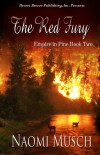
Lots of us do. It is fun to imagine a string of stories spun out of one group of characters or out of a single, long storyline like Lord of the Rings. On October 15th, my new novel The Red Fury released from Desert Breeze Publishing. It is the second book in my historical series Empire in Pine. It’s been a thrill ride, but I’ve also discovered a few things about writing a book series along the way.

Writing a series involves some preparation and organizational techniques that differ from writing a single book, but for the most part, it’s still just writing a great story . . . or two.

Here are four basic starter tips to keep in mind if you have a series churning up ideas in your imagination.

  • Give your all to one book at a time. In other words, concentrate on Book One. You have to begin with One Great Idea before you can move onto the next. But it’s very easy to get distracted trying to plan for the bigger picture.

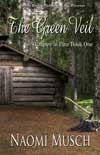
For Empire in Pine, I began with The Green Veil, a book I’d had mulling about in my mind for years and couldn’t let go of. I focused all my energy on building and writing the story of Colette who married impulsively just before the fellow she’d always cared for showed up. It wasn’t until near the end that I realized another story was waiting to be told, and I allowed myself the freedom to explore its possibilities. It’s easy to get mired down in planning a long chronicle of narratives before you even know if you’ve succeeded writing a great story in the first one, so focus on that and get it down. First things first. Write Book 1. Make it the best it can be on its own, just in case that series never develops.

  • Decide if your series is going to be based around a single character whose adventures continue from book to book, a group of people with each person’s story being told in a separate volume, multiple generations, or around an event or theme. For instance, Empire in Pine is generational. I wanted to tell the story of several women’s lives (mothers & daughters) — their adventures and romances — during the rise of Wisconsin’s rich logging era. Book 2 is about the main character’s daughter from Book 1. Book 3 (coming next July) is about the daughter of the main character from Book 2. I have another book series in mind based around different women who come to the United States as King’s Girls, or Casket Girls, from France. Each one would be a separate story. The only relation between the books would be that thread that they are all Casket Girls.

It may seem like a simple decision, but when you begin to examine the possibilities, you might find that stories can be told a better way from a different person’s POV or from another angle.

  • Get a bird’s eye view of the number of books in your series. This outcome might change as you go, but if you’re certain you have a series on your hands, think in terms of a manageable goal and number. Not too many writers tell themselves they’re going to write an ongoing series like Harry Potter or some of the detective heroes that have shown up in book after book. And as a new writer, your chances of finding a publishing home for a long series is also slim. So be reasonable.

I knew fairly soon that Empire in Pine would span three books because of the timeline I was covering. Each book is set approximately 20 years apart, from about the late 1840s to the early 1890s — the time it took for Wisconsin’s logging era to begin and rise to its peak.

  • Use a reliable system for organizing your notes. For each book, I use a separate composition notebook in which I generate research, ideas, character traits, plot, scene, goals & motivations, and structural ideas as they come to mind. Some of this gets transferred to a computer file once I start writing the story. These bits and pieces will be easy to reference later. Each composition book is also a different color for each book I write. I can yank them off the shelf quickly when I need to. They’re cheap, sturdy, and just about the perfect size.

There’s much more to writing a series. I’m going to explore this topic further in the days ahead on my blog. Join me, won’t you? http://www.naomimusch.com/apps/blog While you’re at my site, please stop in and investigate my Empire in Pine series. It’s available as an eBook online everywhere. http://www.naomimusch.com/empireinpineseries.htm

Desert Breeze Publishing

The Red Fury – Empire in Pine – Book 1 http://tinyurl.com/3qkt4c9

The Green Veil – Empire in Pine – Book 2 http://tinyurl.com/3ktb54j

Language usage, The Writing Industry

Writing Lesson 3.9-Genre: What is it?

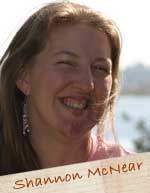
Please allow me to introduce today’s guest blogger, Shannon McNear! Shannon has been writing one thing or another since third grade and has completed five novels in genres from Southern fiction to Revolutionary War historical to fantasy. She has eight children–two in college and six still homeschooling–but does her best to steal slivers of writing and reading time when she can. She has lots of great ideas about writing, so without further ado let’s hear Shannon’s thoughts on…

__________________________________________________________________

gen·re  (zhän r )

n.

1. A type or class: “Emaciated famine victims … on television focused a new genre of attention on the continent” (Helen Kitchen).

2(a). A category of artistic composition, as in music or literature, marked by a distinctive style, form, or content: “his six String Quartets … the most important works in the genre since Beethoven’s” (Time).

 (The American Heritage Dictionary, via thefreedictionary.com)

When I first started writing, the one thing I knew was that I wanted to write what I love to read. Adventure, romance (well-done, please), some action, but lots of deep thought as well, all woven together with smooth and beautiful writing. I didn’t really pay attention to length or form or anything else. After a while, though, the question was posed, just what kind of story am I writing? Is it romance? Adventure? Suspense or mystery? Contemporary or historical? Science-fiction or fantasy? And why on earth did it matter? I just wanted to WRITE, for crying out loud!

It mattered, I found, because like music and painting, writing is an art form, and the techniques you use to create depend upon what you want your piece to look like.

In painting, are you creating a miniature? Is it a portrait or a landscape? A framed piece or a mural? Are you just trying to cover a wall with color?

For music—a jingle for a 15-second commercial? A praise chorus? The next radio hit, and will that be country, rock, or hip-hop? Maybe a symphony?

So it is in writing. Are you going for less than a thousand words (flash fiction), several pages (short story), a small book (novella), a medium book (novel), or a really long story in one thick volume or maybe several (epic saga, LOL)? The writing, storybuilding, and character-developing techniques you use vary with all of these. If you have a very detailed plot with several characters, don’t be surprised if they don’t fit into a short story. Likewise, if you have a simple story idea with a single point of view, but you want to write a novel, well … don’t be surprised if you find yourself writing about a lot of nothing just to get the page count in. In general, “bigger” stories call for longer page counts, and “smaller” stories for shorter, but … not necessarily.

First, let’s go back and look at what the genres are.  Remember, this is a basic overview, and often the lines are blurred.

ROMANCE:  Your classic “boy meets girl, boy loses girl, boy gets girl back” story. Sure, it’s sometimes “formula” (no surprise that the couple ends up together), but the fun is in how they get there. There’s a reason why something becomes “formula” … because it works with the readers! Usually has a “HEA” (happily ever after) ending. Can range from sweet (kissing is absent or minimal, maybe handholding) to spicy (or more). Example: anything from Pride and Prejudice and Love Comes Softly to Harlequin “category romance.”

SUSPENSE/THRILLER:  Key words are action, tension, danger. Your character is in peril or must protect someone in peril. With a thriller, the peril is global. Example: John Grisham, Clive Cussler, Tom Clancy … The Bourne Identity.

MYSTERY:  Involves a crime of some kind, usually a murder, where one or more characters must figure out “whodunit.” Example: the Agatha Christie series.

SCIENCE-FICTION:  Can employ any of the above elements, but the setting is either futuristic or on another planet, but with “hard science” details. In other words, “it could happen.” Think Star Trek rather than Star Wars, which is more properly “space opera”—sci-fi which employs elements of the next genre …

FANTASY:  Commonly thought of as anything that contains magic, wizards, witches, elves, dwarves, or hobbits, but the lines have blurred to the point that anything with supernatural elements sometimes gets lumped into this genre. Examples: Lord of the Rings or Watership Down.

PARANORMAL:  The supernatural, usually but not always in our world and time: angels, demons, vampires, werewolves … and usually not from a Christian perspective. Example: Twilight.

HISTORICAL:  Takes place in the past, usually World War II or before. Example: Anne of Green Gables. Subgenre is the western, made famous by Zane Grey and Louis L’Amour, set in the American West, usually pre-1900 and post-Civil War.

This list is by no means exhaustive. For more lists, and longer explanations, Google the phrase “genre categories.” There’s a good one on the “Dummies” website, and some at Wikipedia.

Next time, I’ll talk about the conventions of genre—what regular readers of the various types of story expect, and how we can give them the experience they’re looking for by how we write the story.

_________________________________________________________________

A Bit More Bio–

A transplant from the Midwest, Shannon McNear has lived for the last 20 years in the Lowcountry of South Carolina with her husband and eight children. With two graduated and in college and the younger six still homeschooling, she does her best to steal slivers of writing and reading time in between being ballet and drama mom. She’s served in worship and women’s ministry, in writer’s groups, and as an occasional book reviewer. Mostly she just loves to share the Lord or some tidbit of cool research she’s just found. Glimpses of her life can be found at www.shannonmcnear.com, and you can email her at sdmcnear@gmail.com.


Announcements, Personal Motivation

Writing Lesson 3.8-Get Ready for NaNoWriMo!

It’s hard to imagine that any lover of literary lore hasn’t heard of NaNoWriMo, but hey…the truth is sometimes stranger than fiction.

NaNoWriMo, short National Novel Writing Month, is billed by it’s non-profit sponsors, the Office of Letters and Light, as “30 days and nights of literary abandon!” You may abandon a lot of things during the National Novel Writing Month of November–healthy meals, sufficient sleep, non-writing-related school work, maybe even take leave of your senses–in your drive to scribe 50,000 words in 30 days, but for lovers of the written word, this is a challenge that’s hard to pass up. And if 50K words sounds unattainable and you happen to be 17 or under, fret not! The NaNoWriMo Young Writers Program allows you to tailor your own ambitious word goal.

The rules state that you can’t begin writing until November 1 and must reach your target word count by 11:59 p.m. November 30th, BUT if the challenge tempts you like a double-dog-dare there are plenty of things you can do NOW to increase your odds of success.

  • Choose your Challenge–Go to the adult site or young writers’ site and get signed up. You even get a cool web badge that you can add to your social media. Nothing like having all your friends ask how it’s going to encourage you as you write.
  • Browse through the resources included on each site. The Young Writers Program site has a special Resources tab and a great Dare Machine right on the home page that’ll get you thinking “outside the box.”
  • If you need more story ideas, visit OLL’s related Script Frenzy site and try the Plot Machine. Once you quit laughing and groaning, try making your own plot machine by inventing an assortment of settings, characters, and story goals. Happy shuffling!
  • When you’ve got an idea…or at least a direction…you ARE allowed to sketch out a rough outline, diagram, or storyboard–anything that will help you pre-shape your story without actually beginning to write it. (I’ve been known to use Post-It Notes on the back of a door so that I can rearrange them as I experiment with sub-plots.)
  • Use the NOVELWritingSite archives (listed in the left sidebar) to review past articles on plotting, setting, characterization, goal/motivation/conflict, themes and motifs. Plenty of ideas in there!

If November isn’t a good month for you to undertake the challenge, don’t despair! Camp NaNoWriMo is open year-round, offering an idyllic writer’s retreat smack-dab in the middle of your crazy life (so there’s no excuse for copping out!)

But if there’s even a remote possibility that the NaNoWriMo challenge might, perhaps, just maybe help you get a serious manuscript underway–or even just follow a crazy idea wherever it takes you–why not give is a go? Have fun with this! And once you’ve signed up, leave a comment here so we can all cheer you on!


Editing, Self-publishing, The Writing Industry

Writing Lesson 3.7-Who is Pilcrow?

I want to introduce my new best friend.

We met when I formatted my novel, Grow Old With Me, for publication in various eBook formats.

Meet also known as Pilcrow.

This mark should become your best friend too. Pilcrow shows the end of each paragraph and opens access to other non-printing characters in a document. It is turned on and off in the tool bar when using Microsoft Word. Pilcrow is rather shy, so it won’t print or show its face unless you ask it to appear.

Copy and paste this post to a Microsoft Word document and locate the symbol in your toolbar. Click on it and watch the spaces between words become a dot. Pilcrow will appear at the end of each paragraph. Use this valuable non-printing friend to show errors in your masterpiece.

When formatting an eBook or your manuscript you want to avoid all extra spaces. Pilcrow showed that I have a habit of hitting the space bar at the end of a paragraph. This creates an unwanted space. This tool allowed me to see those and remove them.

I left an unwanted space after the above sentence so you can see it with the Pilcrow tool on. When Pilcrow is off, the space won’t print a dot, but I’d have an error code flagged if I had written this to format into an eBook. You might have a squiggly green line to indicate an error in your typing. Pilcrow will tell you exactly why it’s incorrect.

Pilcrow will bring his friends to show line spaces between paragraphs, extra  spaces in the middle of a sentence, spaces between sentences, and tab keys used to indent lines. (Instead, use Format to set indentations and spacing for paragraphs.) It’s proper to use only one space between sentences.  If you have Pilcrow turned on, you’ll see that I have two spaces before this sentence as shown by the two dots. I also have an unwanted space between the words extra and spaces in my first sentence here. I used the tab key to indent this paragraph so I have an arrow pointing toward my first word. (Webmaster’s comment: I hope the arrow is still there. Some details may get lost in cyberspace during conversion.) If you have problems seeing these, increase the font size of the document so they stand out.

I can’t imagine writing without using this tool since I learned its value. I’ll edit scenes as I go to avoid a reformat at the end of the book.

Styles, Find, and Replace are more friends I met during my eBook adventure. I’ll be back to introduce these tools that assist in making your documents ready for a publisher, eBook reader or your teacher.

http://www.word.mvps.org/FAQs/Formatting/NonPrintChars.htm is a document with data about Pilcrow and the invisible things it reveals in your work. Check it out. You’ll be surprised what you may type and never see.